Friday, 25 August 2017

Martha Marcy May Marlene

(Sean Durkin/2011/USA)


After two years off the grid Martha resurfaces and contacts her sister. She’s been living in a cult and as we watch her difficulty reintegrating to normal life her time with the cult is shown in parallel through flashbacks. This is an understated film that gently observes as Martha’s paranoia increases in tandem with the memories of indoctrination into more and more unorthodox behaviour. The cuts from the summer house to the cult house are done well and the scenery and ambient sounds heighten the sense of immersion in the settings which works brilliantly. It swells to an ambiguous ending which is just right with fine performances from Olsen, Hawkes, Aulson and Dancy.

(3/5)

Wednesday, 23 August 2017

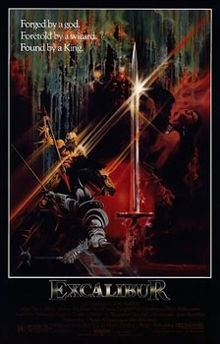
Excalibur

(John Boorman/1981/Ireland)

Boorman’s rendering of Thomas Mallory’s La Morte D’Arthur to film is both glorious and flawed but it succeeds more than it fails. It encapsulates the mythic qualities of the story with Wagner, back lit forest scenes, shining armour, courageous and noble actions, fog laden mystical events and a glinting magical sword. He marries all this with gritty and violent battle scenes, knights wading through ditch waters and mud to hack at each other and incessantly loud, commotion heavy background sounds. In fact almost every line of dialogue is delivered as if attempting to be heard at a very noisy party. But the constant walla and background action create the effect of a real life Brueghel painting where there is something going on all the time. It’s reminiscent of some scenes in Tarkovsky’s Andrei Rubliev in that respect. However it veers dangerously close to Pythonesque farce too and the inability of the knights to appear without their full armour on is bafflingly comic. Uther’s macho man bedding of Igrayne is made ludicrous by the sight of him bearing down on her in full plate armour! It’s overlong also and begins to lose focus with meandering strands of the Holy Grail subplot. Edited down to 140 minutes one wonders what extra grist Boormans original 3 hours would have provided to tie in these strands. But everything is done with such orchestral bluster and fanfare that it carries through to the finale. Pedants might be irked by its setting in the “dark ages” while using garb and paraphernalia from a much later time period but it is in essence a raucous, romping mash up of the original myth with the historical diminishment of pagan mysticism through the rise of Christianity. There are wonderful performances from Nicol Williamson as Merlin, Nigel Terry as Arthur and Helen Mirren as Morgana.

(3.5/5)

Monday, 21 August 2017

Under The Skin

(Jonathon Glazer/2013/UK)


Adapted from Michel Faber’s novel of the same name this beautifully low key film posits the question “What am I?” through the experience of an alien life form on the hunt for human men with sinister intent. Luring them to a rundown house using feminine sexuality, the alien, played brilliantly by Scarlet Johansson, begins to question who it actually is. We eventually discover that it has been playing the part of a female and it absconds from its mission due to increasingly identifying with the body of the woman it poses as. The theme transcends a simple sci-fi tale of a rogue incognito alien who has to be dealt with by its superiors and begins to query the machinations of sexuality and gender and the malleability of the two. It is set on the streets of Glasgow with real hidden camera captured interactions between Johansson and random men. Beautifully shot with a haunting score from Mica Levi this is a stone cold classic that will have you reeling by the end and musing on what you’ve watched for ages after.


(4.5/5)


Saturday, 19 August 2017

Standby

(Ronan and Rob Burke/2014/Ireland)

Standby is a predictable but weirdly off beat rom-com film that efficiently ticks boxes but falters in pacing and the charm stakes. I just never believed that Brian Gleeson was getting anywhere near Jessica Paré, ever. And that’s not to do with anything as superficial as looks, his self deprecating wit edges into glum misery too much and frustrated rather than beguiled this viewer. The film also takes too long getting round to the venting of past misdemeanors that will lead the pair to the inevitable hook up. This is due mostly to their night out in Dublin which incorporates pints, dinner, a wander around the streets, an accidental locking out on a hotel roof, a wedding afters, more dinner, an impromptu skiffle gig in The George, a northside Dublin house party and a crack of dawn footpath chat whilst waiting for a taxi home. I thought time had slowed down to a creep. Too much goes on and some of the comedy misses the mark, especially the hackneyed “straight folk in a gay bar” gags. What do stand out are the shots of Dublin both interior and exterior. They are deliberately kept a bit dark and gloomy but it somehow suits the tone of the film and each setting feels right. A weak full length debut from the Burke brothers then, who cut their teeth with various film shorts and TV directing slots. Oh and for the record, no northside house party ever in the history of northside house parties was broken up by the guards bursting in the front door and chasing people. They would have knocked first and then have been told to “fook off ourra tha ya bollix” and most probably would have done so too.

(2/5)

Thursday, 17 August 2017

The Way Back

(Peter Weir/2010/USA)

The story of The Way Back, from the book A Long Walk, has been disputed, refuted and unproven over the years but it remains a story that captures the imagination. Escaping from a Siberian gulag and walking 4000 miles through cold, mountains and desert to reach freedom in India is an epic and treacherous feat that Weir plays out for a sense of adventure and heroism. But it doesn’t ring true, he’s made great movies but this isn’t one of them. The prison scenes at the start are the best besides some of the landscape shots further on but the journey itself unfolds with no real surprise or shock. Whether it’s harrowing, awe inspiring, fraught with danger or dehydration you can’t help but inwardly shrug your shoulders a little bit. For me the pan national gang of escapees which conveniently allowed Ed Harris as an American lead in what is a Polish mans fable rings hollow, as does having Colin Farrell as a Russian criminal. I understand the need to use big names to sell a movie but this would have benefited a lot more from some strange faces. I kind of gave up when Saoirse Ronan appeared as a stray waif in the mountains. The joy at the end when they reach India mirrored the sweet relief felt as the credits rolled.

(2/5)

Monday, 7 August 2017

Betty Blue (Directors Cut)

(Jean-Jacques Beineix/1986/France)


I first saw Betty Blue in 1990 or 1991 at the age of 16 and to that fop haired, desert booted, long coated, Lucky Strike smoking version of myself it was cool and crazy and French maaaaan. Watching it a quarter century or so later I can see why my younger self would have been taken with it but I’m not sure the film itself holds up to scrutiny. It certainly tries to be cool, it’s crazy in parts and it’s undoubtedly French! But in its portrayal of mental illness and the behaviour of people around it the film rings hollow. I think there’s an element of romanticism here which puts artistic aspirations on a pedestal, which is fine, but those aspirations are fueled by the maladjusted mind of Betty who only gets worse as the film progresses with no reality check from Zorg, her older lover and the supposed artist. Betty is given little constructive help from those around her, rather she is accommodated, tip toed around and in many ways feared for her outbursts and temper mentality. A naive attempt at retreat to more peaceful living fails and then a barmy and criminal misadventure attempting to give Betty what she wants also fails. The film ends with a clumsy jab at an establishment that doesn’t engage with people who are different. The irony here being that if the mental health resources provided by the establishment had been engaged with sooner by the main characters an awful lot of grief could have been avoided. Yes, that is a terribly rational analysis of an overtly sexy and romantic film about doomed love but once you scratch at the surface of this film there’s very little underneath. 

There’s sex, epic drinking and general fun and adventure that is slowly overshadowed by Betty’s increasingly erratic behaviour. Zorg is lazy, lacks ambition and is more interested in knocking back tequila rapidos than work, be it his deadbeat job or writing his book. In fact it is Betty who is the passionate one, the driving force behind getting him published. His best energies are put into keeping Betty happy which fail due to his acceptance of her madness as essential to who she is rather than recognizing it as an illness that needs treating. This concession to flawed romanticism is where the film falls down and its meandering three hours seems self indulgent as a result. The girl needs help, not to be allowed descend into mental chaos. It’s also a slightly misogynistic film; the story is told through a male gaze (the voice over by Zorg lets us know this is him looking back at the events) and there’s plenty of Béatrice Dalle to look at. We discover Zorg has gone on to success as a writer following his escapade with the young, vibrant and batshit crazy Betty. Through his affair with this free spirit, this muse, this crazy angel he reaches artistic fulfilment - how romantic, how tragic, how fucking pretentious. 

In the final scene as Zorg has a fumble of her breasts before committing an act of selfless love it becomes more readily apparent than at any other point in the previous three hours that this film is, in essence, adolescent. I’m being very critical of it through my old eyes of course; it is, like Catcher in the Rye or On the Road, something to be consumed at a particular age and there’s nothing wrong with that. It’s also a gorgeous looking film with a great soundtrack. It’s easy to get swept away by it but it doesn’t stand up to deeper analysis in hindsight.


(3/5)

Sunday, 6 August 2017

Lucy

(Luc Besson/2014/France)

Lucy is a happy go lucky student living in Taipei who gets entangled in a vicious Korean gang’s drugs mule operation. As a result she ingests a super drug that allows her to utilise more than the usual 10% of brainpower. Does she go all the way up to 11? No, in fact she goes all the way up to 100.It’s an interesting premise but this is an action movie with a race against the clock finale so any effort at guessing what a 100% effective brain can do is flippant at best. For the purposes of this film Lucy can do just anything she fucking wants you puny underachieving 10 percenters. This includes making people float and stick to ceilings, turning on other peoples TVs from the other side of the world and listening to phone calls by grabbing them, Matrix style, out of thin air. If I could get to 15% and turn off the alarm from across the room in the morning and have breakfast on the go downstairs while I got dressed upstairs I’d be more than happy! If you haven’t guessed this is all a bit silly but it is executed with an acute sense of pacing and flashy action. Luc Besson knows what works and Scarlett Johansson plays the lead perfectly. It’s a gum chewer but the gum is tasty.

(3/5)